Browser extension
The browser extension allows you to enable Stringtale with the push of a button. It avoids the page having to reload, allowing you to make changes
to the copy of your modals (which would otherwise disappear once the page reloads). It’s also the user-friendly alternative to appending ?stringtale to the URL.
Install and use the browser extension
- Install the browser extension from the Chrome Web Store.
- Navigate to your project’s test / preview environment. We’ll use the Stringtale website for this guide.
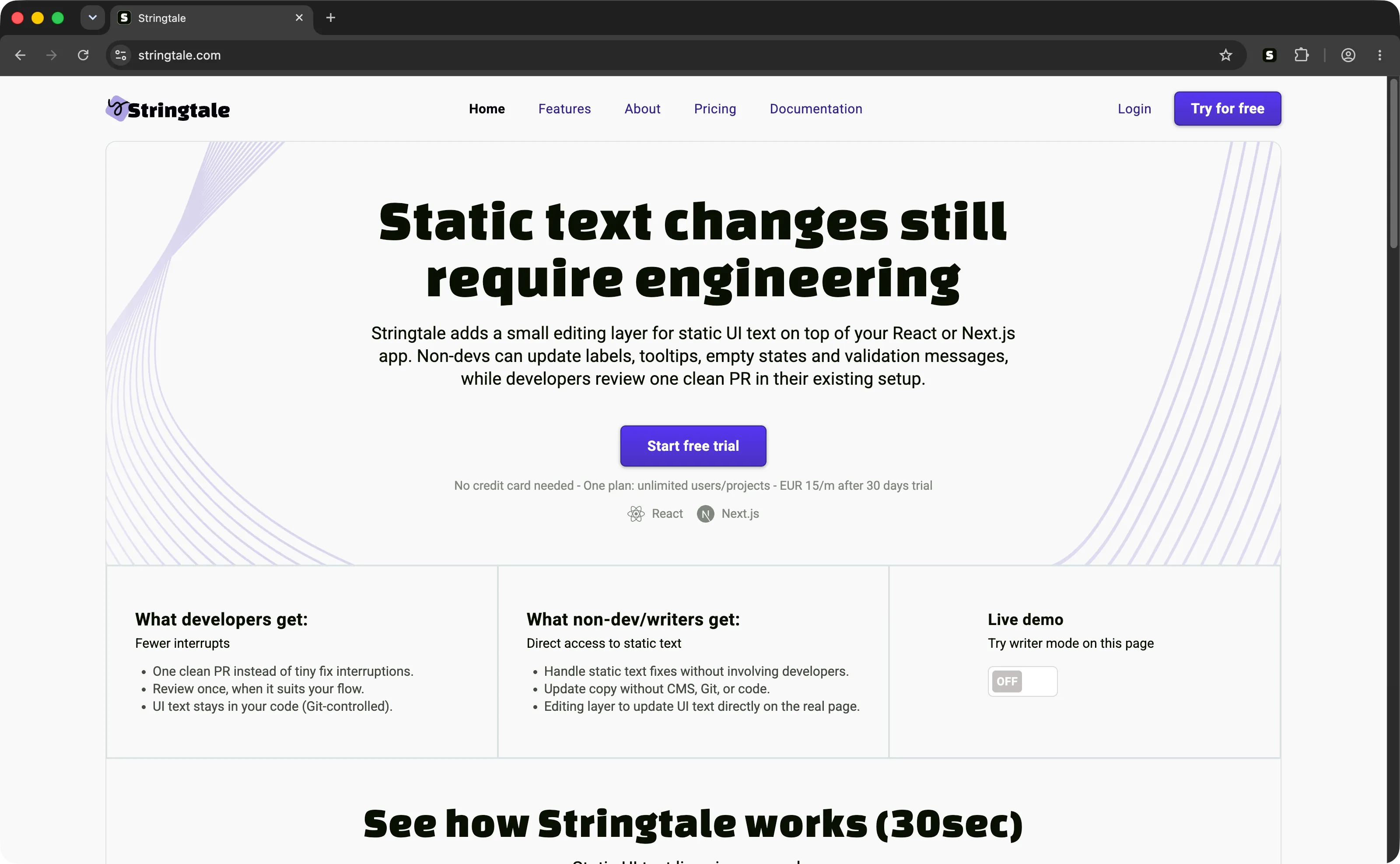
- Click the Stringtale button in the toolbar of your browser.
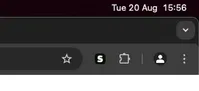
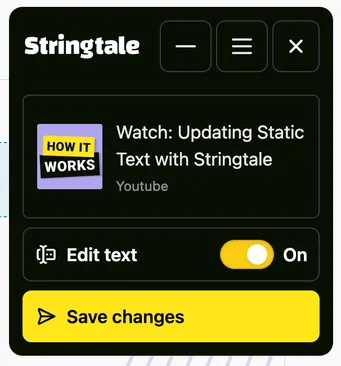
- Stringtale will become active on the page.
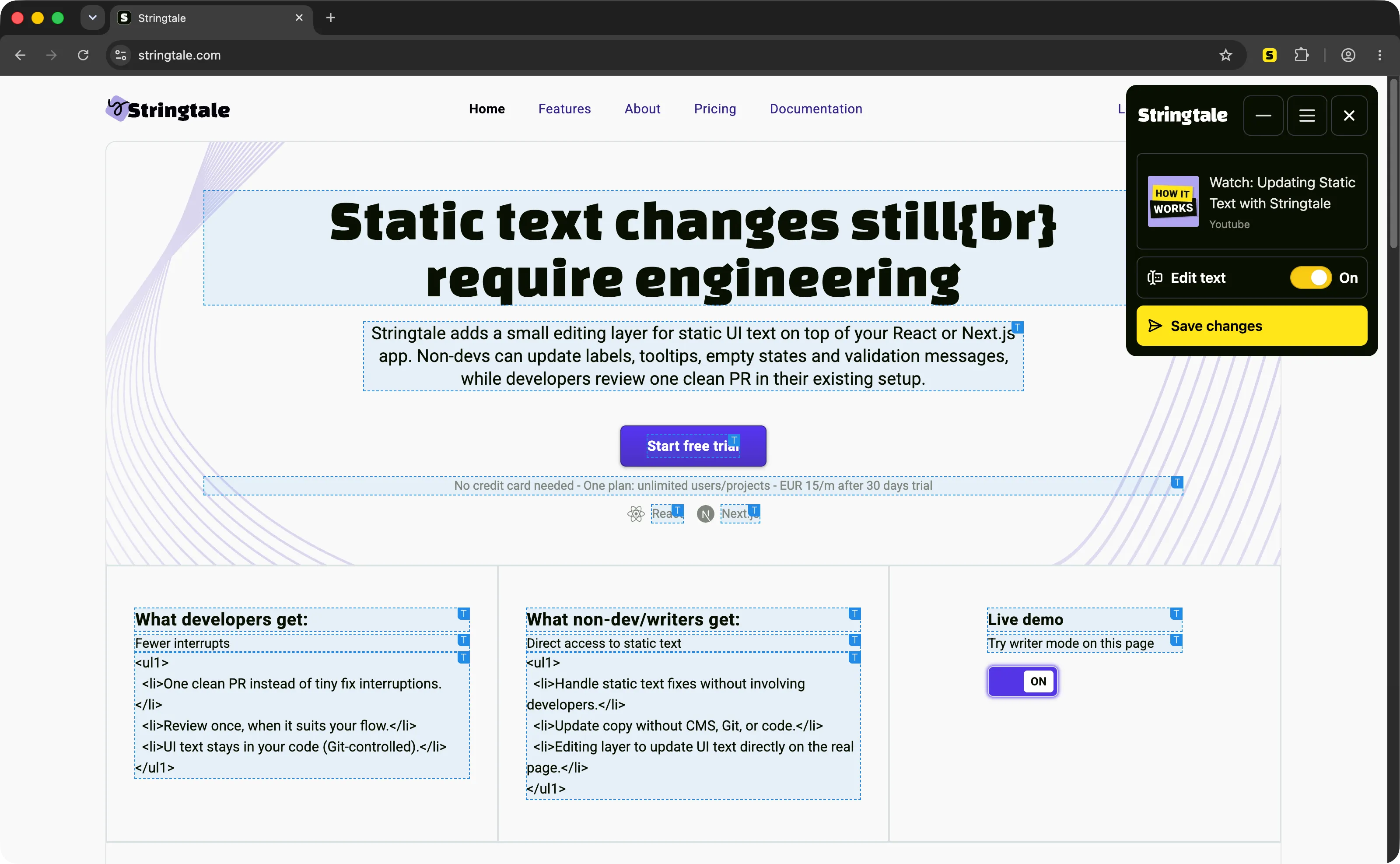
- Along with the menu, you’ll notice that Stringtale-enabled text on the page is now shown as editable fields.
- During your editing session, you can enable/disable “Edit Text”. This allows you to preview your changes without the distraction of the editable text fields.
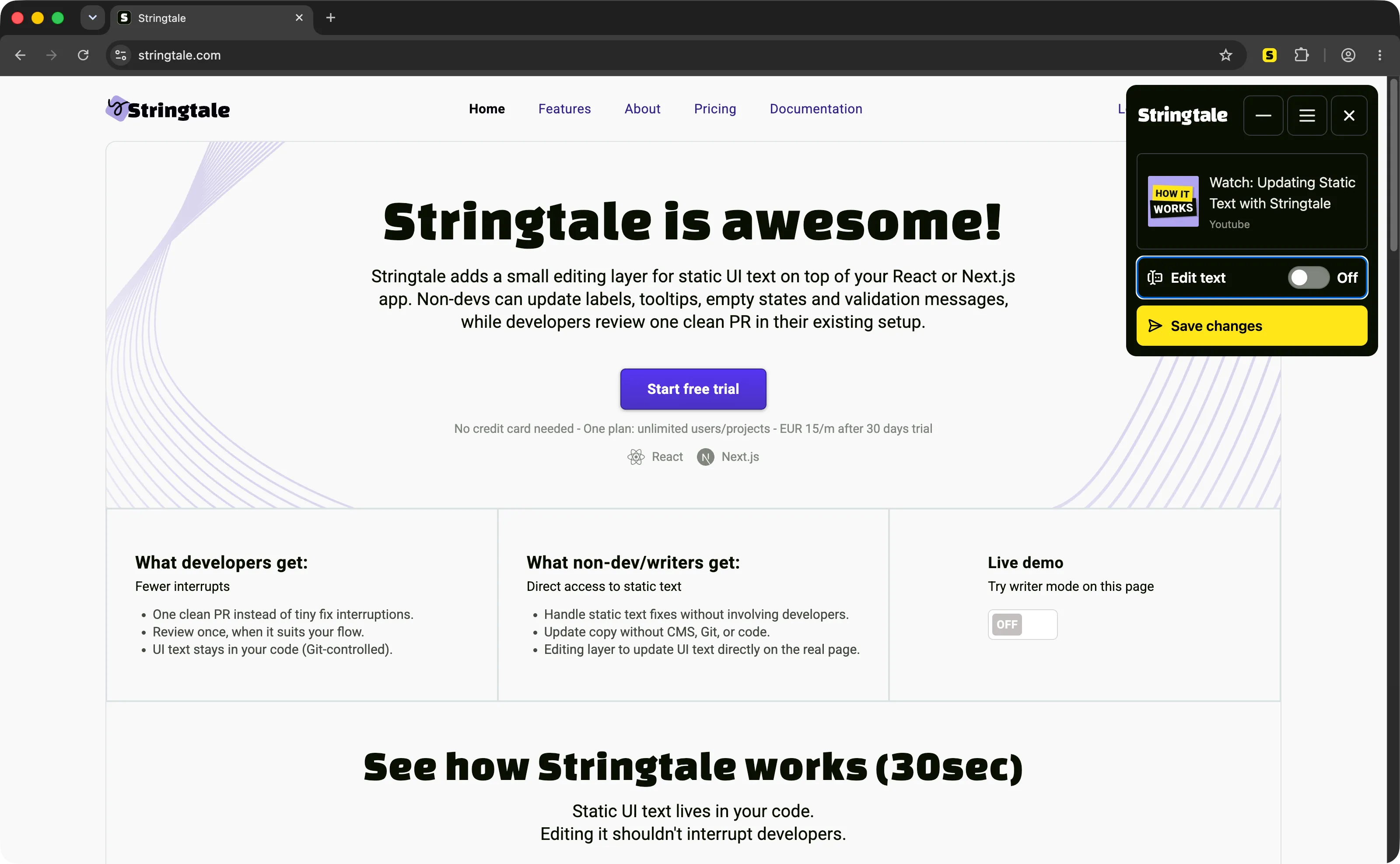
- Once you’ve finished making changes, click on
Save changesto save them to Stringtale, ready for the developer to integrate with the next update.
(Optional) Enable login
You may have noticed that in the example above you were immediately able to edit all Stringtale-enabled text on the website. This might not be desirable in your organization. Stringtale offers a solution for that in the form of editor logins.
- Go to the Stringtale Dashboard.
- Go to Projects.
- Open the project (or click on Edit project settings) you want to deploy to your test / preview environment.
- Scroll down to
API keys, click onAdd API Key, and create a new API key. Make sure the Enable login checkbox is checked. - Update your test environment with the new API key as
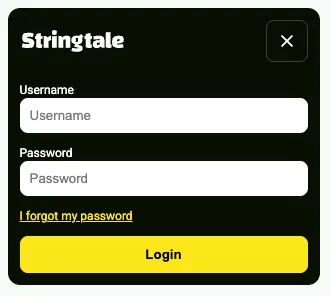
STRINGTALE_API_KEY. - The next time somebody attempts to update Stringtale-enabled text on the website, they’ll be greeted with a login screen:
- To manage which Editors (and Developers) can edit text within a project, add them to a Workspace or a Project.